
Most tree service jobs around Rogue River fall between a few hundred dollars and about $2,000 per tree, based on national cost guides updated in late 2025 and 2026. Trimming usually costs less than removal, and stump grinding is often priced on top. What you actually pay is set by the written estimate from the company you reach at (541) 855-3193, and that call is free.
Published price ranges by job
The ranges below come from national cost guides that survey contractors in many markets. None of them is a quote for Rogue River, and each guide uses its own method, so treat the table as a way to tell whether an estimate looks normal.
| Job | Published range | Source | Updated |
|---|---|---|---|
| Trimming, one tree, national average | $430 to $640 | LawnStarter trimming guide | September 24, 2026 |
| Trimming, tree under 30 feet | $85 to $415 | LawnStarter trimming guide | September 24, 2026 |
| Trimming, tree 30 to 60 feet | $215 to $790 | LawnStarter trimming guide | September 24, 2026 |
| Trimming, tree over 60 feet | $475 to $1,835 | LawnStarter trimming guide | September 24, 2026 |
| Trimming, one tree, Salem, Oregon | $441 to $655 | LawnStarter trimming guide | September 24, 2026 |
| Trimming a pine | $210 to $1,630 | LawnStarter trimming guide | September 24, 2026 |
| Trimming an oak | $230 to $1,480 | LawnStarter trimming guide | September 24, 2026 |
| Removal, typical tree | $385 to $1,070 (average $850) | Lawn Love removal guide | October 5, 2026 |
| Removal, tree over 80 feet | $1,160 to $2,000 | Lawn Love removal guide | October 5, 2026 |
| Emergency removal | $450 to $3,000 | Lawn Love removal guide | October 5, 2026 |
| Stump grinding, first stump | $120 to $210, plus $40 to $70 per extra stump | Lawn Love stump guide | December 27, 2025 |
| Arborist visit or consultation | $75 to $250 per hour | LawnStarter arborist guide | October 9, 2026 |
| Written arborist report, one tree | $250 to $400 | LawnStarter arborist guide | October 9, 2026 |
| Brush removal | $330 to $630 per acre | Lawn Love land clearing guide | December 27, 2025 |
| Clearing lightly wooded land | $580 to $2,100 per acre | Lawn Love land clearing guide | December 27, 2025 |
| Clearing heavily wooded land | $3,300 to $5,600 per acre | Lawn Love land clearing guide | December 27, 2025 |
The stump guide adds that most companies charge a minimum of about $100 no matter how small the stump is. Salem is the only Oregon city in the trimming guide, and its range sits close to the national figure.
Trimming, removal and stumps priced side by side
Trimming is usually the smaller bill because the tree stays standing and less wood has to be cut and hauled. Removal costs more because every piece of the tree comes down and has to be dealt with. Stump grinding is a separate machine and a separate step, so many companies price it as its own line.
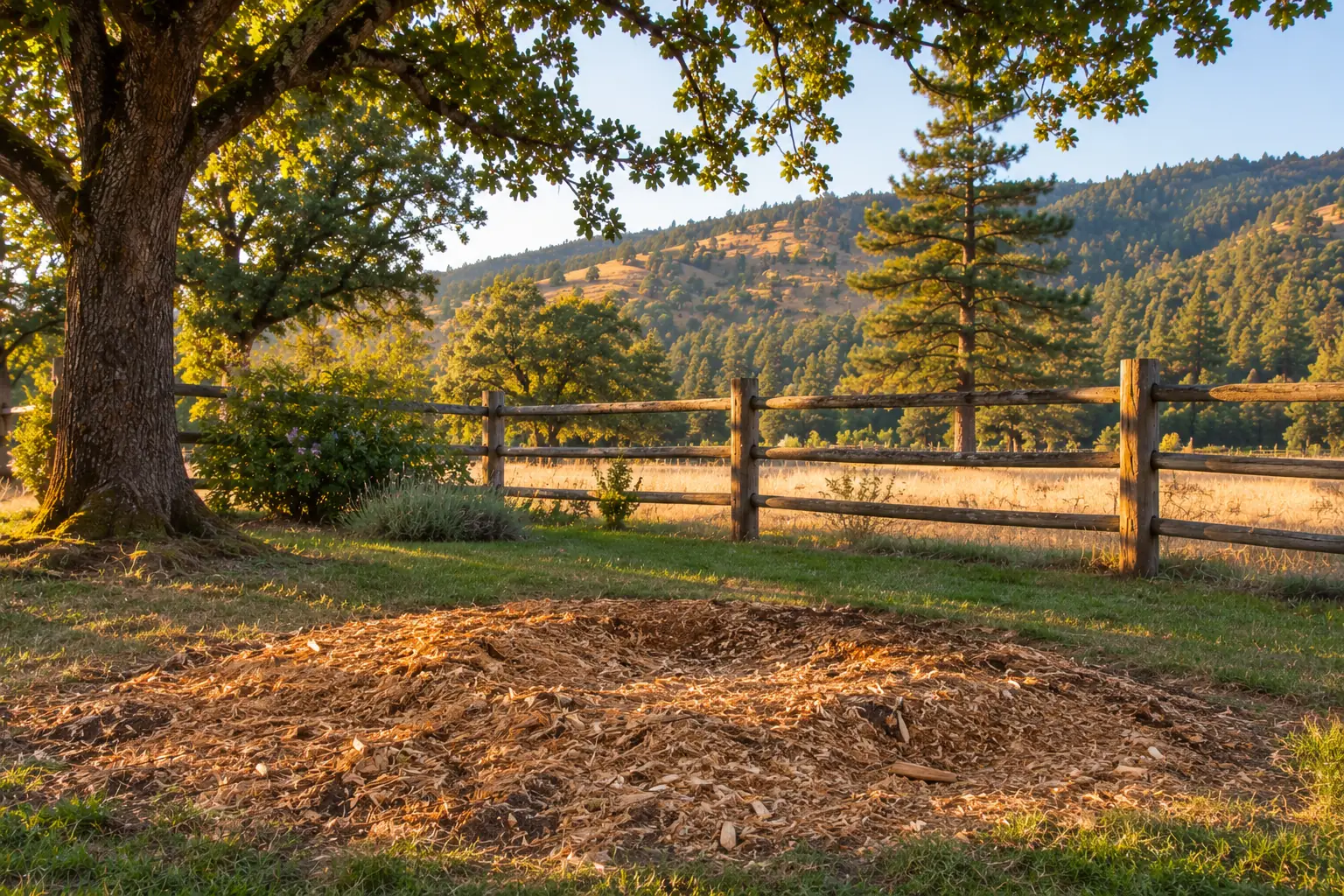
One visit can produce three very different numbers. A company might offer to take the dead limbs off a big ponderosa pine for a few hundred dollars, take the whole tree down for well over a thousand, and grind the stump for a little more. Ask for each option priced separately. The trimming page, removal page and stump page explain what each job involves.
Local factors that raise or lower an estimate
Height and access move the price more than anything else, and many properties around Rogue River are rural acreage with long gravel drives, slopes and big conifers. These items change estimates here more than any others.
- Tree size and species. A tall pine or fir takes more cuts and more rigging than a fruit tree. The trimming guide's pine and oak ranges show how wide the spread can be.
- What the tree could hit. A roof, shop, well house or fence under the tree means lowering pieces on ropes rather than dropping them.
- Getting equipment close. Gates, narrow bridges, soft ground in winter and steep banks can keep trucks and chippers back, which adds hand labor.
- Condition of the wood. A dead or decayed tree can be too weak for a climber, which changes the method and the price. The hazard and dead tree page covers those jobs.
- Fire season hours. On lands protected by the Oregon Department of Forestry's Southwest Oregon District, the 2026 regulated closure proclamation, effective May 15, 2026, allowed power saws all day only at low fire danger. At moderate danger saws could run before 1 p.m. and after 8 p.m., at high danger before 10 a.m. and after 8 p.m., and at extreme danger not at all. Each saw needed a shovel, an extinguisher of at least eight ounces and a fire watch of at least one hour after use. Shorter working windows can stretch a job across more days.
- Getting rid of the wood. The same proclamation bans backyard debris burning for the whole fire season, so brush and limbs usually have to be chipped or hauled.
- Timing. Emergency calls after a storm sit at the top of the removal ranges.
Pine wood and beetles can change the cleanup plan
Leftover pine wood is a beetle question as well as a cleanup question, and that can affect what you pay for. The Oregon Department of Forestry's slash management fact sheet says pine engraver beetles breed in fresh pine pieces about 3 to 8 inches across. Pine slash created from January through September should be chipped, burned or buried before beetles fly in April, or within about two months. Slash cut from October through December can be scattered in the sun to dry instead.
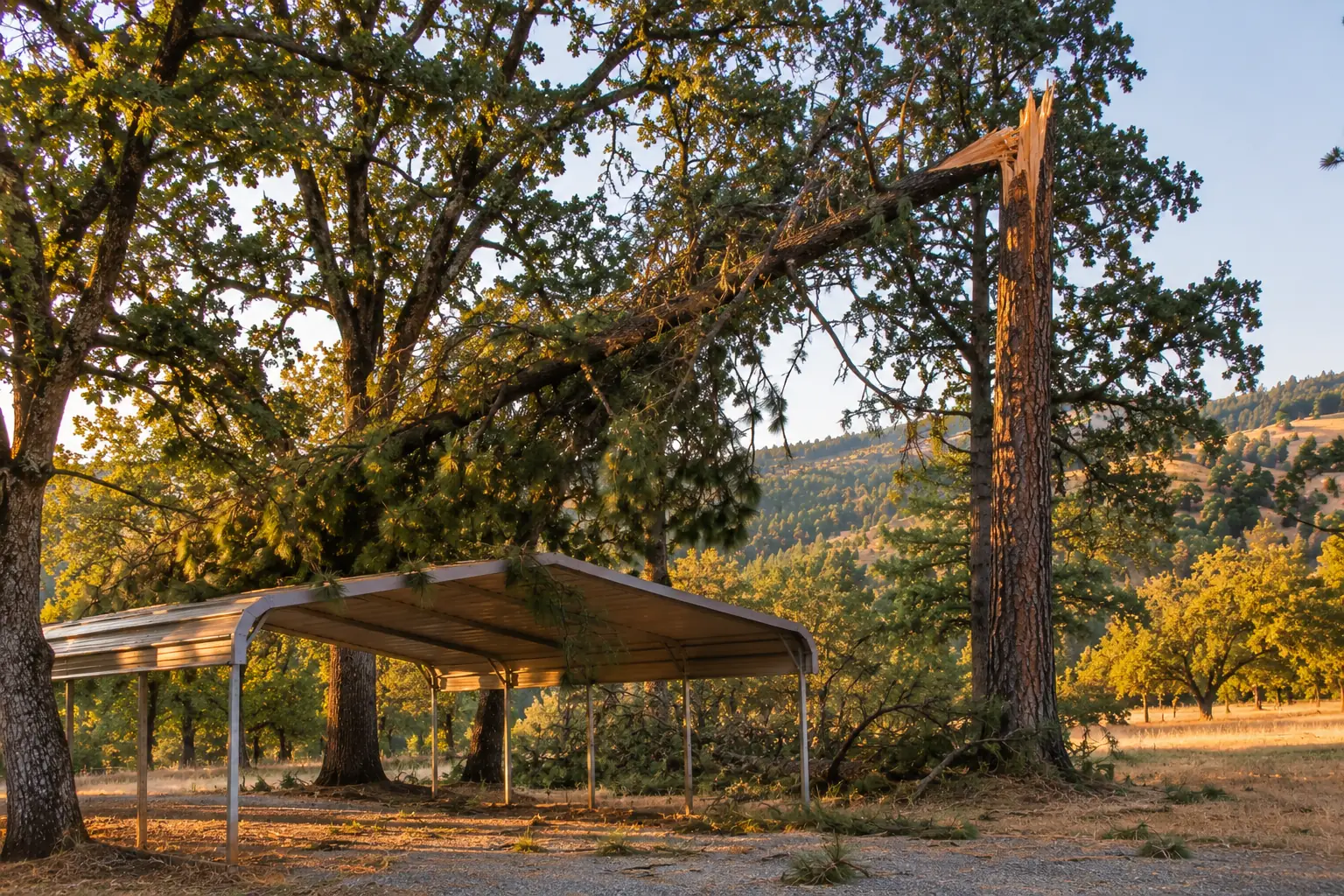
So a pine trimmed or removed in spring or summer may need its limbs chipped rather than piled, with fresh rounds kept away from live pines. Ask the company how it plans to handle pine wood, and whether chipping is in the price. The bark beetle guide explains what to look for on standing pines.
Ways to keep the cost down
You can make tree work more affordable with a few choices on your side, although no single step promises a smaller bill. The company's written estimate still decides the price.
- Get more than one written estimate on big jobs. Two companies may plan the same tree in different ways, and the plan drives the cost.
- Ask for trimming and removal priced separately. If the tree is sound, taking out a dead limb may solve the problem for much less.
- Book outside fire season when the job can wait. Without saw hour limits a crew can work a whole day, which can finish a big job sooner.
- Bundle jobs. Several trees, or trimming plus stump grinding, quoted in one visit can save a second trip. The stump guide's lower price for each extra stump shows how setup costs get shared.
- Keep the wood or the chips. Leaving firewood rounds, or chips left on the property well back from buildings, can cut hauling charges. Keep fresh pine rounds away from live pines.
- Skip the stump grind where it does not matter. A stump at the back of a pasture can stay where it is, cut close to the soil.
- Clear the way before the visit. Move cars, open gates and mark the septic field, well and buried lines.
- Deal with a weak tree before it fails. Planned work avoids emergency pricing, which sits at the top of the removal ranges.
Free help worth using first
Some tree problems can be handled at no cost before you pay anyone. According to Pacific Power's tree page, the utility provides several vegetation services at no cost, including keeping safe clearance around power lines, and a free temporary service disconnect so licensed professionals can work safely near the line to a home. The page tells homeowners never to prune or remove trees near power lines themselves. For those requests, which can wait, Pacific Power's customer service number is 1-888-221-7070. A tree touching or lying on a line cannot wait: stay 35 feet back, call 911 and then the downed-wire line at 1-877-508-5088.
The defensible space page from the Oregon State Fire Marshal lets you schedule a free defensible space assessment. That visit can show which trees and brush affect fire risk before paying for fire-safe limbing or brush clearing.
For a sick tree you are not sure about, OSU Extension's guide How to determine what's ailing a tree suggests sending clear photos and your location to your county OSU Extension office and asking for the local forester.
Paying for the work safely
Paying in stages and in writing protects you more than any discount. The Oregon Construction Contractors Board's consumer tools page states that any construction agreement above $2,000 has to be put in writing, and it warns never to pay the full amount up front and not to pay in cash. The CCB license page lists tree servicing among work that needs a license.
The company you reach through (541) 855-3193 is an independent tree service with an Oregon CCB license. Before signing, look the company up, along with its complaint history, on the CCB license search, and request a certificate of insurance.
Reading the estimate before you agree
A good estimate tells you exactly what you are buying, so you can compare two of them line by line. Before you sign, check that it answers these points:
- Which trees are included, described so there is no confusion on the day.
- Whether the job is trimming, removal or both, and how much of each tree is coming off.
- What happens to the limbs, logs and chips, and whether pine wood will be chipped.
- If the stump will be ground, and to what depth.
- How the crew will reach the tree and where machines will drive.
- What changes the price if the crew finds hidden decay or a bigger job.
- When payment is due and in what form.
If two estimates are far apart, the gap usually comes down to scope rather than hourly rates. The estimate request page lets you describe the job in writing, and every service on this site is linked from the home page.
Frequently asked questions
What is the typical price of tree service in Rogue River?
National guides updated in late 2025 and 2026 put trimming at about $430 to $640 per tree and removing an average tree at $385 to $1,070, with big or emergency removals running higher. Local access, slope and fire season rules change it. The written figure from the company that visits is what to plan around.
Is trimming cheaper than removing the tree?
Usually, because the tree stays up and less wood has to be handled. A sound tree with one dead limb is often better trimmed than removed. Ask for both options priced separately.
Does fire season make tree work cost more?
Fire season rules can add time to a job. Under the 2026 Southwest Oregon proclamation, power saws were held to set hours when danger was moderate or high and banned when it was extreme, and backyard debris burning was banned all season. Shorter work windows and chipping instead of burning can raise the labor on a big job.
Do I pay for the estimate?
Usually not for an ordinary job, but the company decides that, not this site. The call to (541) 855-3193 and the referral are free. Ask on that call whether the visit and the written price cost anything, and remember you have no duty to hire the company afterward. A written arborist report is a separate paid service, shown in the table above.
Why is my estimate higher than the national average?
Averages blend small yard trees with big rural conifers. A tall pine near a house, reached by a long gravel drive, will often land near the top of the published ranges. Ask the company to explain which factors drove the price.