
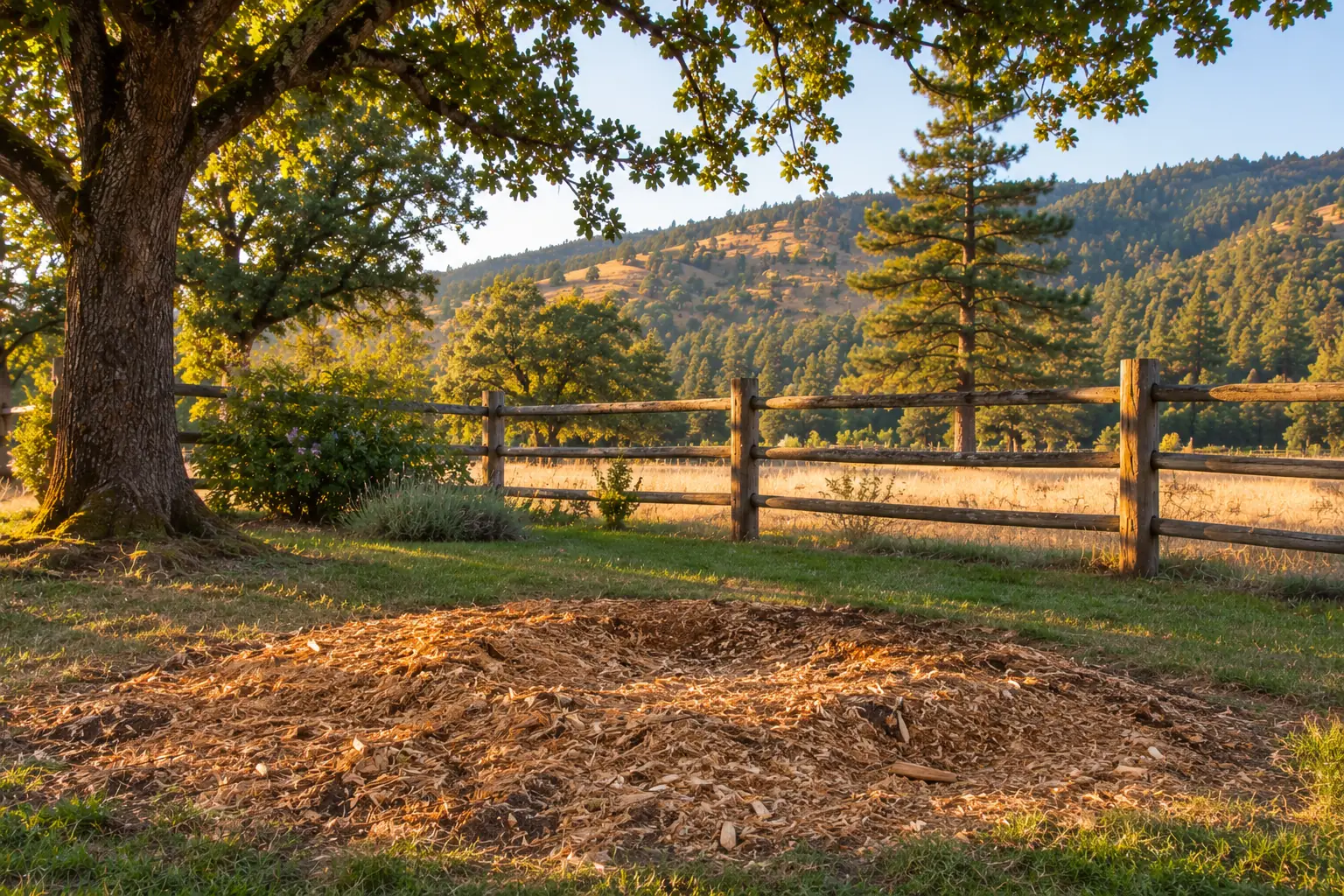
Stump grinding in Rogue River uses a cutting wheel to chew an old stump into chips below ground level, so you can mow, plant or build over the spot. Call (541) 855-3193 free and you are put through to one independent tree service with an Oregon CCB license. Have it measure the stumps and quote the grinding on paper. Most outfits quote a job like this for nothing, but check that before the visit.
Three ways to deal with a stump
Grinding is the most common answer, but it is one of three, and the right one depends on what the ground will be used for next.
| Option | What it leaves | Good fit |
|---|---|---|
| Grind below grade | Chips in a shallow bowl, roots left to rot | Lawn, garden beds, most yards |
| Cut flush and leave | A low stump that rots over years | Pasture, woodland edges, creek banks, spots near pipes |
| Dig out stump and main roots | A large hole and loose soil | A future footing, slab or driveway |
Digging out is heavy work and disturbs a wide circle of soil. On a rural lot with a well, a septic field or a creek nearby, the extra disturbance is usually a reason to choose grinding or leaving the stump instead.
How a grinding visit goes
A typical visit runs in this order, and the estimate should cover each step.
- Measure. The operator measures each stump across the top, since many companies price by diameter.
- Check underground. Utility marks from the 811 locate should already be on the ground, and the owner points out private lines.
- Pick the machine. A small walk-behind grinder fits through a garden gate. A larger tow-behind or tracked grinder works faster on big stumps but needs a clear path.
- Grind. The wheel sweeps back and forth across the stump and down. Surface roots running into the lawn are ground if the estimate includes them.
- Finish. Chips are raked into the hole, piled for you, or hauled off.
Ask how deep the company grinds as standard. A few inches below grade is enough for grass. A spot for a new tree or a shed may need more.
Call 811 before the wheel goes in
A grinder moves soil, so plan on a utility locate. The Oregon Utility Notification Center's FAQ defines excavation as moving earth, rock or other material by any means, and says the request has to be made no earlier than 10 business days, and no later than two full business days, before work starts. The homeowner exemption is narrow: digging on your own property, under 12 inches deep, and not inside an established easement. Stump grinding often goes deeper than that.
The same FAQ says most utilities mark only up to the meter or the point where your private service connects, at no charge. On acreage around Rogue River, the buried line from the well to the house, power run out to a shop and irrigation pipe usually belong to you, so mark them yourself or hire a private locator. Ask the tree service whether it places the 811 request or expects you to, and get the answer on the estimate.
Septic fields and wells
Keep heavy grinders and trucks off the septic drainfield, since driving on it can crush pipes and pack the soil. Before the visit, flag the tank lid, the edges of the drainfield and the well head, and tell the operator which way to approach the stump. A light walk-behind machine can often reach a stump the bigger grinder cannot. If a stump sits right on top of a pipe or tank, cutting it flush may be the safer call.
Street tree stumps in town
Inside Rogue River city limits, a stump in the parking strip between the sidewalk and the street is covered by the city's street tree rules. The ordinance, Chapter 12.20, says street and park tree stumps must be removed below the ground surface so they do not stick up (section 12.20.180), and says trees cannot be removed from a public parking strip without the street tree committee's permission (section 12.20.020). If you are not sure whether a stump is on city land, call City Hall at (541) 582-4401.
Creekside and riverbank stumps
On a bank, leaving the stump is often the better choice, and the rules point the same way. The city's riparian chapter reaches 75 feet inland from the Rogue River's top of bank and 50 feet inland from Evans Creek, Wards Creek and other fish-bearing streams. Section 17.135.040 lists all filling, grading or excavating in that corridor among the prohibited activities unless the city and the state and federal agencies approve, and section 17.135.080 allows downed trees to stay in the corridor.
Outside city limits, the Soil and Water Conservation District's Jackson County guide uses the same distances and says placing soil, gravel or fill near streams needs prior approval. Check with the city, or Jackson County Development Services at (541) 774-6900, before grinding inside a setback. The old roots of a creekside stump also keep holding the bank for years while they rot.
Grinding in fire season
A stump grinder is a spark-emitting engine working close to dry grass, so ODF's fire season rules apply in summer. The 2026 regulated closure proclamation for the Southwest Oregon District says engines of that kind not named elsewhere in the rules are prohibited on extreme fire danger days. On other days they may run only in a cleared area, which the rules describe as having no flammable plants within 50 feet on any side, and only with a pressurized garden hose or an extinguisher of 2.5 pounds or more ready to use. On moderate days the hours are before 1:00 p.m. and after 8:00 p.m., and on high days before 10:00 a.m. and after 8:00 p.m.
On a dry lawn edge or pasture, that 50 foot cleared area is hard to meet. Grinding is easy to put off, so many owners book it after the fall rains.
What grinding costs
Grinding is usually priced by stump diameter, with a minimum charge. LawnStarter's stump grinding cost guide, updated October 5, 2026, lists these national figures:
| Item | National figure |
|---|---|
| Typical job | $131 to $438, average $272 |
| Rate by size | $2 to $5 for each inch across |
| Minimum fee | About $100 |
| Each additional stump | $37 to $70 |
| Hardwood surcharge, such as oak | $50 to $150 per stump |
| Hauling chips and debris | $2 to $3 per inch of diameter |
Rocky soil, a long walk from the driveway, many small stumps scattered across acreage and buried lines all push the number up. Keeping the chips and grinding several stumps in one visit bring it down. The written estimate from the company is the figure that counts. See the cost guide for how stump work compares with removal.
What to ask the company
These questions cover the usual surprises:
- May I have your CCB number? Anyone can check it on the Oregon CCB license search. The Oregon Landscape Contractors Board's tree work FAQ says stump grinding is work a CCB license allows.
- Who requests the 811 locate?
- How deep will you grind, and are surface roots included?
- Are the chips left, spread into the hole, or hauled away?
- Which machine will you bring, and what will it drive across?
- Is there a minimum charge, and a price per extra stump?
When a tree has not been cut yet, the removal page explains taking it down first, and many companies quote both together. For a stump from an old dead tree that came down on its own, the hazard and dead tree page is worth a look. The home page covers every service and town on this site.
Frequently asked questions
How long does a stump take to grind?
A small stump can take minutes. A wide oak or fir stump with big surface roots can take an hour or more. Ask the operator when it measures.
Will the stump grow back after grinding?
Grinding removes the stump crown, which stops most trees from resprouting. Some species send up shoots from the remaining roots for a season or two, and these can be mowed or cut.
Can I plant a new tree where the stump was?
You can, but rake out most of the fresh chips and bring in soil first, or plant a few feet to one side of the old spot. Ask the company to grind deeper if you plan to replant there.
Is it worth grinding a stump in a pasture?
Often not. A stump cut low and left in a field or woodland edge rots in place. Grinding is mostly about mowing, planting and looks.
Do I need to be home for stump grinding?
Not always, but walk the site with the operator first so you can point out private lines, the septic field and any sprinkler heads.